


Your Professional License Plate Manufacturer
Experienced Factory
OEM Licenseplate Co., Ltd has more than 20 years of experience in making custom number plates, license plates, license plate frames, traffic signs, road signs, and metal nameplate signs for car dealers, governments, and consumers around the world.
Competitive Price
Over the years we have become able to provide high-quality number plates with an excellent level of service at a very competitive price. we believe that we can offer you the cheapest number plates in the world.
OEM and ODM Available
We are capable of immediate make-to-order according to the customer’s sample, image, or sketch. Our design team can turn out accurate samples effectively.
24 Hours Online Response
We have set up a dedicated customer service team to provide customer service 24 hours a day, so your after-sales problems can be responded to quickly.


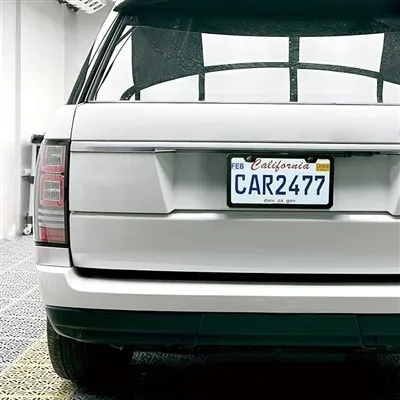


A license plate is a metal or plastic plate that is affixed to a motor vehicle. It usually displays a combination of letters, numbers, or both, which uniquely identifies the vehicle and its registration. License plates are issued by governmental authorities to help identify and track vehicles for various purposes, such as enforcing traffic laws, taxation, registration, and law enforcement.
The design and format of license plates vary from country to country, and they often contain specific information such as the state or country of registration, vehicle classification, and registration number.
Reasons That License Plates Exist
License plates (or number plates as some parts of the world may call them), have been around for over a hundred years now, with states like New York having license plates on vehicles since the year 1901, and for the UK, registration plates have existed since the year 1904. Different parts of the world slowly started to adapt to having license plates assigned to all publicly used vehicles, and below we give our own 3 reasons why having number plates assigned to every vehicle is a good idea.

So You Know It Is Your Car
The first reason is plain and simple, you do not want to look stupid and walk to a car that is not yours and look like a complete idiot for trying and opening the door, then wondering why it won’t open. There are a lot of cars that will be exactly like your car in terms of their appearance, so the only way you will know which one is yours is by having a glance at the license plates.

Identifies You
Registration plates give you your own personal identification, which is needed for other legal reasons like paying road tax for the vehicle you own, and ultimately being responsible for anything the vehicle in question is linked in with you. License plates have narrowed the headache down to simply just needing the license plate alone to find out information like the vehicle owner, insurance status and tax expiry etc.

So No One Takes off With Your Car
Imagine cars in today’s time not displaying registration plates. Your car would not last very long on your driveway if license plates did not exist, well that’s what we think anyway. Criminals would take off with a car, and you would never find your car because there are no registration plates on it, so technically it does not exist. Aside from cars missing alone, other important reasons like theft, traffic incidents, and other crimes are greatly reduced by knowing exactly who is the actual owner of the vehicle.
Essential Benefits of Customized Number Plates


Optimally Reduces Theft Risks
Are you still wondering if owning a personalized number plate is right? Perhaps, once you realize that these number of places create your identity completely separate from the crowd and make your automobile easily detectable once stolen.
Moreover, you can even reduce and combat theft possibilities. After all, what kind of thief would steal an easily spottable vehicle? Perhaps, even an easily recognizable car can combat theft with these personalized number plates.
Create a Personalized Individuality
In today’s world, evolving in a way that separates you from the crowd is becoming increasingly essential. Moreover, there are numerous ways for you to create your separate individuality. Perhaps, if you can think so much about being different, why not set your drive apart from other automobiles.
Interestingly, these personalized number plates are the way to go for enhancing creativity and creating your car/bike’s persona like no other. Moreover, how you define being unique is the way to go when selecting a distinctive number plate for your automobile.
Effective in Enhancing Advertising Promotional Activities
Are you looking for innovative ways of creating a solid hold within today’s competitive business scenarios? The vast world of advertising makes it vital to develop unique and impactful ideas for brand promotions. Perhaps, equipping your promotional automobile with a special number plate will expand your reach towards potential customers.
Gone are the days of traditional vehicle wraps for promoting your brand. Today’s innovative times require methods like custom-made number plates to promote your brand.
Create a Separate Identity for Your Automobile
In today’s era, the need and importance of being unique surpass all potential barriers. As you remember the time owning a custom-designed number plate was a thing for the rich and famous. Well, the only difference now is that you use these number plates to create an identity for yourself but a separate persona for your ride.
The fact that every custom-made number plate design stands out and is unique is a remarkable thing. After all, your automobile might not be one of a kind. Still, your cherished number plate will be one of a kind, creating a separate identity for your car/bike.
Common Materials of License Plates
License plates are metal or plastic signs that identify vehicles on the road. They are usually issued by the government or a private organization, and they have a unique combination of letters and numbers that can be used to track the vehicle's owner, registration, and history. But what are license plates made of? Here are some common materials:
Metal License Plates
Metal license plates are the most common type of license plates in the world. They are typically made of aluminum, steel, or tin, and they have a thin layer of paint or reflective coating on top. Metal license plates are durable, resistant to corrosion, and easy to manufacture. They can also be embossed or stamped with raised characters, which makes them more visible and harder to counterfeit.
However, metal license plates also have some drawbacks. They can be heavy, noisy, and prone to bending or denting. They can also fade, chip, or peel over time, especially if they are exposed to harsh weather conditions or chemicals. Metal license plates may also require periodic cleaning and polishing to maintain their appearance.
Plastic License Plates
Plastic license plates are a newer alternative to metal license plates. They are usually made of acrylic, polycarbonate, or polyvinyl chloride (PVC), and they have a smooth surface with printed or engraved characters. Plastic license plates are lightweight, flexible, and easy to customize. They can also have different colors, shapes, and designs, which makes them more attractive and distinctive.
However, plastic license plates also have some disadvantages. They can be brittle, fragile, and susceptible to cracking or breaking. They can also warp, melt, or deform under high temperatures or direct sunlight. Plastic license plates may also fade, scratch, or stain over time, especially if they are exposed to dirt, moisture, or UV rays. Plastic license plates may also require special care and cleaning to prevent damage.
Today, you will find many countries in North America, Central America, and South America following the same license plate size. In such countries, the plate must measure 12 × 6 inches (30.5 × 15.2 centimeters). In the majority of European countries, the license plate will typically measure between 20.5 × 4.3 inches (52 × 11 centimeters) and 20.5 × 4.7 inches (52 × 12 centimeters).
From shortest to longest, here’s a list of countries that have vastly different car license plate size standards from the US and Europe:
|
Country |
Car License Plate Size |
|
|
Inches |
Centimeters |
|
|
Switzerland |
11.8 × 3.8 |
30 × 8 |
|
Saudi Arabia |
12.2 × 6.1 |
31 × 15.5 |
|
Iraq |
12.6 × 3.5 |
32 × 9 |
|
Japan |
13 × 6.5 |
33 × 16.5 |
|
Andorra |
13 × 5.5 |
33 × 14 |
|
Thailand |
13.4 × 5.9 |
34 × 15 |
|
New Zealand |
14.2 × 4.9 |
36 × 12.5 |
|
Chile |
14.2 × 5.1 |
36 × 13 |
|
Italy |
14.2 × 4.3 |
36 × 11 |
|
Taiwan |
15 × 6.3 |
38 × 16 |
|
San Marino |
15.4 × 4.7 |
39 × 12 |
|
The Philippines |
15.4 × 5.5 |
39 × 14 |
|
Indonesia |
15.6 × 5.3 |
39.5 × 13.5 |
|
Brazil |
15.7 × 5.5 |
40 × 13 |
|
Ecuador |
15.9 × 6.1 |
40.4 × 15.4 |
|
Jordan |
16.9 × 4.3 |
43 × 11 |
|
South Africa |
17.3 × 4.7 |
44 × 12 |
|
China (gas cars) |
17.3 × 5.5 |
44 × 14 |
|
China (New Energy Vehicles) |
18.9 × 5.5 |
48 × 14 |
|
Syria |
17.7 × 3.9 |
45 × 10 |
How to Put a License Plate on a Car
Before You Install License Plates
There are a few things to keep in mind before you install your license plates:
1)Make sure that the plate is placed in the correct position. Most states have laws specifying exactly how and where the license plate belongs, so check your state’s regulations.
2)Use screws and bolts that are specifically designed for license plates. Ordinary screws may not be strong enough to withstand the elements.
3)Be sure to attach your registration sticker to the plate. Without it, you could be subject to a ticket.


Choose The Right Tools and Hardware
Choose the right installation tool for your license plate before you put it on your car. Look for a mounting hardware that is made specifically for your car's make and model. You can find base mount hardware and tools at most auto parts stores. Follow the instructions that come with the installation tool.
Most license plates come with self-tapping screws that are specifically designed for use with plastic. However, if you're attaching your license plate to a metal plate bumper, you may need to use bolts and nuts instead.
Install a License Plate
The process of attaching a license plate to a car is relatively simple and can be done in a few minutes, once you have the right mounting hardware and tools.
1)Before attaching a license plate, make sure that the bracket plate is properly secured to the vehicle.
2)The license plate bracket should be placed so that the bottom edge of the license plate is level with the bottom of the car's bumper. Once the license plate bracket is in place, line up the mounting hole on the license plate with the mounting hole in the bracket.
3)Be sure to use any bolts or screws that came with the license plate bracket.
4)After all screws or bolts are tightened, double-check that they are snug by giving the license plate a firm tug.
5)Once the plate is securely in place, you will need to apply the registration sticker from the Department of Motor Vehicles (DMV) or your state’s equivalent organization. This sticker must be placed on the rear license plate and renewed every year.
6)With the license plate now properly attached, your car will be legal to drive on public roads.
7)If your state requires a front plate, you will need to install it before you can legally drive your car.

DIY Guide: Removing Your License Plate
Removing old ones can be a hassle, whether getting a new car or switching up your license plates. Every motorist should be able to quickly and easily take off a license plate. In a matter of minutes and with only one tool, you can remove your old license plate and put on your new one.
Before you start, you’ll need a few tools. No, you won’t need high-tech gadgets like Bond or James Bond. All you need is a screwdriver and some gloves (optional).
Locate the screws that hold your license plate in place. There are usually two or four screws depending on the plate size. Use your screwdriver to turn each screw counterclockwise until it’s loose. If the screws are rusty or stripped, you might need a lubricant like WD-40 to help loosen them up.
Once the screws are loose, you can remove the license plate from your car. Hold onto the plate so it doesn’t fall off and cause any damage or embarrassment, like in the movie Get Smart.
After you’ve removed the license plate, take a moment to clean up any dirt or debris that may have accumulated around the screws. You can also wipe down the plate to make it look shiny and new.
If you’re putting on a new license plate, now is the time. Line up the new plate with the holes in your car and screw it in place using the screws you removed earlier. Remember to tighten the screws enough to secure the plate, but not so tight that you strip the screws.
How to Clean a License Plate
Cleaning Equipment
Warm water
Dish-washing liquid or detergent
Towels or tissues
WD-40 multi-use product
Unscrew the license plate off your car. If the license plate hasn’t been cleaned in a while, the screws may be rusty and jammed. Spray some WD-40 to lubricate them while wiping away the rust with a tissue.
Fill up a container with warm water and mix a dish-washing liquid or detergent in it. Use a towel or a tissue, dip it in the water, and then rub the license plate with it. This should remove the top layer of dirt, grime, residue off your plate.
The hard-to-reach edges around the numbers still need to be cleaned thoroughly. Grab a Q-tip and trace it around all the edges and the numbers; this will help clean the license plate and decrease the possibility of build-up or rust.
Now, there still might be stains and dirt that can’t be cleaned just with soap or a Q-tip. Here you might need something that gets the job done extra well. Spray the WD-40 onto the license plate and wipe it off. Now your license plate is void of any grime or dirt.
Our Certificate

Frequently Asked Questions about License Plate
As one of the leading license plate manufacturers and suppliers in China, we warmly welcome you to buy high-grade license plate made in China here from our factory. All customized products are with high quality and low price.