

A must-have for self-driving in Europe: a complete analysis of traffic signs
Apr 03, 2025
Leave a message
01 Overview of European Traffic Signs
When driving in Europe, traffic signs are undoubtedly the most important information guide for drivers. These signs not only regulate road traffic order, but are also the key to ensuring driver safety. Understanding the origin of European traffic signs is crucial to safe driving, especially when switching countries. And understanding the origin and evolution of European traffic signs is the premise for our safe driving.
The Vienna Convention on Traffic Signs and Signals signed at the Vienna Conference in 1968, stipulates the simplicity and universality of traffic sign text. The text on all traffic signs must be concise and clear, usually place names or easily recognizable common words, such as STOP or TAXI, so that drivers can switch between different countries more calmly.
▍ Vienna Convention and its impact
As of August 2014, 63 countries have signed the convention, including some countries that have not signed but whose traffic signs comply with the convention, such as Iceland and Ireland. Although signatories such as Spain, the United Kingdom, and the Vatican have not formally implemented the convention, their traffic signs are also highly consistent with the convention standards. Therefore, no matter which European country you drive to, you can easily deal with various road conditions by mastering the common traffic signs stipulated in the convention.
02 Traffic lights and right-of-way rules
▍ Traffic light instructions and right-turn rules
In Europe, right-turning vehicles usually need to wait for the green light but can turn right when the straight-through light is red when there is a separate right-turn green light. In most countries, right-turning vehicles must follow the instructions of the traffic lights. Usually, right-turning vehicles need to wait for the straight-through green light to light up before they can pass. However, in some cases where there is a separate right-turn green light, you can turn right when the straight-through red light is red. There may be no traffic lights at night or at some intersections, and you need to rely on the decision of the right-of-way sign.
▍ Right-of-way principles and signs
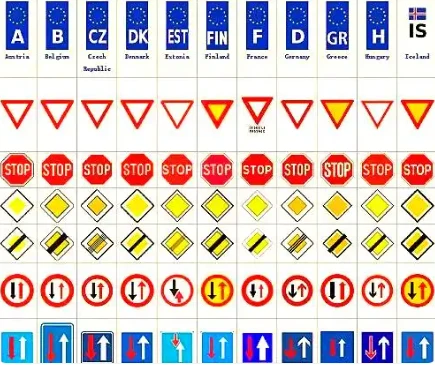
Right-of-way is the core of European traffic, and the principle of priority is treated at intersections without traffic lights. Following the right-of-way signs is the key to avoiding accidents, especially in examples like Austria. Right-of-way is the core of European traffic rules, which stipulates under what circumstances various traffic participants have the right of way. Simply put, the basic principle of right of way is: at intersections with traffic lights, follow the instructions of the traffic lights; at intersections without traffic lights, you need to check the right of way signs.
▍ Traffic sign examples
Various signs are widely used in Europe, such as yield signs, stop and observe before going, etc. Understanding the application of these signs in different countries can help regulate driving behavior and ensure safety. The right-of-way signs in Austria are particularly important. They lay the foundation for your rights on the road. Strictly following the priority of vehicles at intersections is the key to avoiding accidents. Traffic accidents are very likely to occur when you should give way but don't.
03 Analysis of various traffic signs
▍ Stop and give way signs
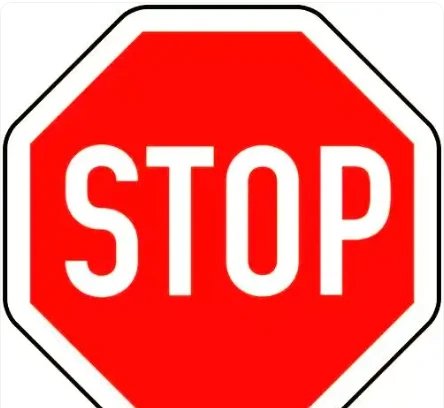
When you encounter this sign at an intersection, you must stop the vehicle to observe before continuing to drive, regardless of whether there are vehicles passing on the crossroad. Internationally, such signs are designed to increase vigilance at intersections, especially in places such as Turkey, where different words are used but the same meaning is helpful for traffic.
▍ Road priority sign
When you see this sign on the road, it means that you have the right of way on that road, unless you encounter the instructions of the traffic light. The priority sign and auxiliary sign are very important in Europe, especially on the road sections with priority. Different countries apply this sign slightly differently, so be careful to identify it.
▍ Restriction sign
Involving double prohibition signs, overtaking and parking restrictions, drivers are required to strictly abide by them; in some specific areas of France, speed limit signs ensure the safety of pedestrians and children. For example, the "No Overtaking" sign is different from the common design in China, so you need to be highly vigilant.

▍ Special road section signs
Signs such as continuous turns ahead and two-way closures remind drivers to pay attention to special road conditions and ensure driving safety, especially in Germany and other regions. Signs such as continuous turning sections ahead and two-way closures are particularly important.


▍ Bicycle and pedestrian areas
In some sections or areas, only bicycles are allowed to pass, and other vehicles are prohibited from entering. Some areas are restricted to bicycles or pedestrians only. Please pay attention to the application of these signs in their respective countries to ensure driving and safety. Cyclists should pay attention to traffic safety and ensure that the riding speed is coordinated with the surrounding environment.
▍ Rules of Living Streets
Under the signs of living streets, you must reduce your speed to ensure the safety of children and comply with lane restrictions to promote traffic safety. On living streets, children are allowed to play freely in the lanes. Seeing this sign means that you must slow down to ensure the safety of children and remember to slow down.