

How do digital number plates communicate with authorities?
Dec 15, 2025
Leave a message
Hey there! I'm a supplier of digital number plates, and today I want to chat with you about how these nifty devices communicate with the authorities. It's a topic that's getting a lot of buzz lately, and I'm stoked to break it down for you.
So, let's start with the basics. Digital number plates are way more than just a fancy replacement for the old-school metal ones. They're equipped with cutting-edge technology that allows them to share a whole bunch of information with the right people. But how does that happen? Well, it all boils down to a few key communication methods.
Wireless Connectivity: The Backbone of Communication
One of the primary ways digital number plates communicate with authorities is through wireless connectivity. Most modern digital plates use Wi - Fi or cellular networks, just like your smartphone. When a vehicle is on the move, these plates can send and receive data in real - time.
For instance, cellular networks are super handy for communicating over long distances. Just like your mobile phone staying connected as you drive across town or even between cities, the digital number plate can use the same network to send data to the relevant authorities. Whether it's updating information about the vehicle's registration status or reporting an incident, the cellular connection ensures that the data gets there quickly.
On the other hand, Wi - Fi is great for more local communication. Imagine a vehicle parked in a parking lot or passing by a Wi - Fi hotspot set up by the authorities. The digital number plate can connect to that network and transfer data, such as parking payment details or vehicle inspection results.
RFID Technology: The Silent Communicator
Another cool technology used in digital number plates is Radio - Frequency Identification (RFID). RFID tags are small chips embedded in the number plate. These tags can store information about the vehicle, like its registration number, make, model, and owner details.
When a vehicle passes through a checkpoint or a toll booth equipped with an RFID reader, the reader sends out a radio signal. The RFID tag on the digital number plate picks up this signal and responds by sending back the stored information. It's a super quick and efficient way of sharing data without the need for any physical contact. Authorities can use this information to verify the vehicle's identity and check its compliance with various regulations.
GPS Tracking: Location, Location, Location
GPS (Global Positioning System) is also a crucial part of how digital number plates communicate with authorities. Every digital plate is equipped with a GPS module that can determine the vehicle's exact location at any given time.
This location data can be extremely useful for the authorities. For example, in case of a stolen vehicle, the GPS tracking feature allows the police to track its movements in real - time and quickly recover it. Additionally, traffic management authorities can use the location data to analyze traffic patterns, identify congestion points, and make better decisions about road infrastructure and traffic flow.
Data Encryption and Security
Now, I know what you're thinking. With all this data being shared, how can we ensure that it's secure? Well, that's where data encryption comes in. Digital number plates use advanced encryption algorithms to protect the information they send and receive.
Encryption scrambles the data so that it can only be decoded by the authorized parties. This means that even if someone tries to intercept the data, they won't be able to make sense of it. It's like sending a secret message that only the intended recipient can read.
Examples of Real - World Applications
Let's talk about some real - world scenarios where digital number plates' communication with authorities comes in handy.
- Traffic Offenses: When a vehicle commits a traffic offense, such as running a red light or speeding, the digital number plate can automatically send a report to the traffic police. The report can include details like the time, location, and nature of the offense, along with the vehicle's registration information. This makes it easier for the authorities to issue citations and enforce traffic laws.
- Vehicle Registration and Renewal: Digital number plates can also simplify the vehicle registration and renewal process. Instead of having to go to the DMV (Department of Motor Vehicles) in person, vehicle owners can use their digital plates to update their registration information. The plates can send the necessary data to the DMV, and the authorities can process the renewal online. This saves time and reduces the hassle for everyone involved.
Our Product Range
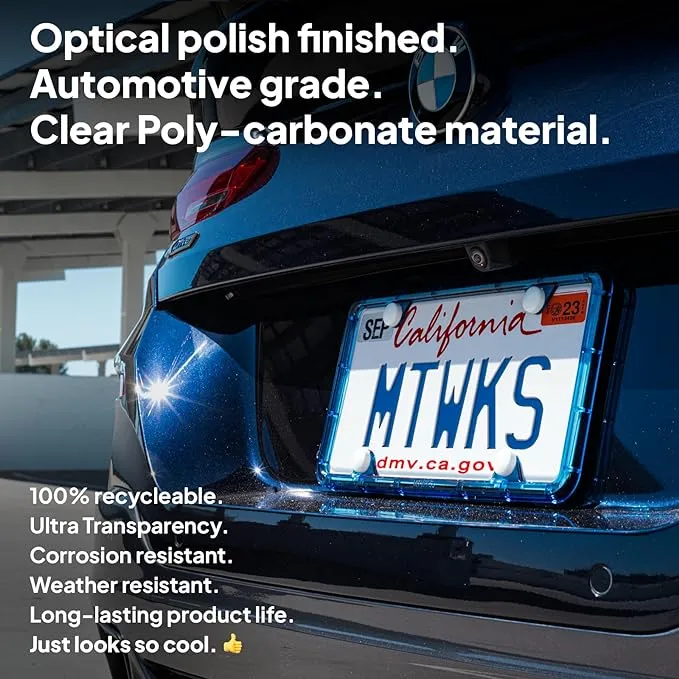
As a Digital Number Plate supplier, we offer a wide range of high - quality products. And while you're thinking about getting a digital number plate, you might also be interested in some of our other accessories. Check out our Premium Polycarbonate License Plate Frame, which adds a sleek and stylish look to your vehicle. We also have the German Black Euro Band License Plate, perfect for those who want a European - inspired look. And for the collectors out there, we have Assorted Replica License Plates that are sure to impress.
Let's Chat!
If you're interested in purchasing digital number plates or any of our other products, I'd love to chat with you. Whether you have questions about how the communication technology works or want to discuss pricing and customization options, I'm here to help. Drop me a line, and let's start a conversation.
References
- "Digital License Plate Technology: An Overview." Transportation Research Institute.
- "RFID in Vehicle Identification Systems." Journal of Automotive Technology.
- "The Role of GPS in Modern Traffic Management." Traffic Science Review.